Sclerotherapy: How Spider Vein Treatment Actually Works
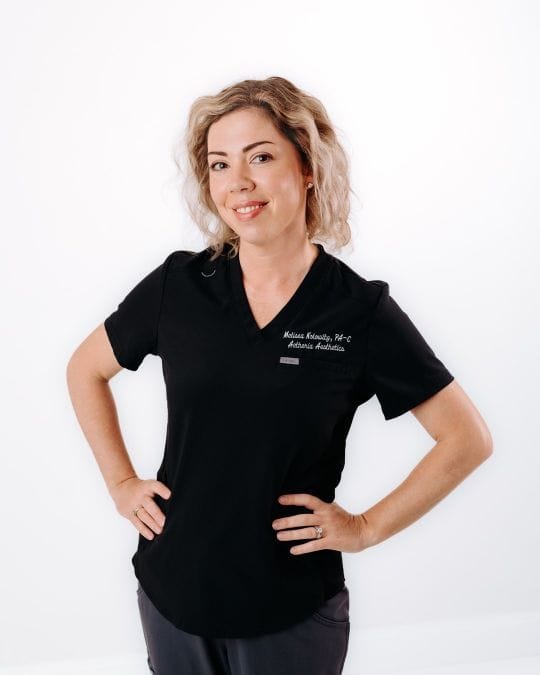
Spider veins are one of those small things that quietly shape what people wear all summer. Sclerotherapy, the injection treatment we use for them at Aetheria Aesthetics & Wellness™ in Pittsburgh’s North Hills, is older, simpler, and more dependable than most patients expect. Here is a plain guide to how it works, from Melissa Kolowitz, PA-C.
What sclerotherapy is
Sclerotherapy treats unwanted surface veins with a series of precise micro-injections. The solution we use, Asclera® (polidocanol), irritates the lining of the vein so its walls seal together. From there your body does the rest: the closed vein is gradually reabsorbed over the following weeks, and blood simply reroutes through the healthy vessels nearby.
That last part is worth pausing on. The veins sclerotherapy treats are cosmetic surface vessels your circulation does not need. Sealing them alters nothing about how blood moves through the leg, which is why the treatment has been a standard for small leg veins for decades.
Spider veins, reticular veins, and why the difference matters
Two kinds of veins respond well. Spider veins are the fine red or purple vessels that show up in clusters, webs, or branches near the surface. Reticular veins are the slightly larger blue-green vessels, one to three millimeters wide, that sit a bit deeper and often feed the spider clusters above them.
That feeding relationship is the heart of good technique. Inject only the visible spider web and its reticular supply line will keep refilling it. Reading the pattern, which reticular vein feeds which cluster, and treating in the right order, is most of what separates a result that holds from one that fades back. It is the first thing Melissa maps before any needle is placed.
What a session is like
After a history review and exam, the treatment itself takes 15 to 30 minutes. The needle is very fine, and the usual sensation is a brief pinch with occasional mild cramping near a treated vein that passes within minutes. No anesthesia is needed, and you can drive yourself home.
Walking right afterward is actually encouraged, since it keeps blood moving through the healthy veins. Typical aftercare is compression stockings for a short period and a brief pause on strenuous exercise, hot baths, and direct sun on the treated area, all of which Melissa reviews with you before you leave.
When the results show up
This is a patience treatment. The injections take minutes, but the fading happens over several weeks as the body reabsorbs the sealed veins, with fine spider veins often clearing sooner than the larger reticular vessels. Many patients see meaningful improvement from a single session; more extensive patterns may call for a second, planned only after we see how the first responded. Veins that seal fully generally do not reopen, though new veins can form over the years with heredity and hormones, and a touch-up session down the road is common. Individual results vary.
What sclerotherapy is not for
Asclera is FDA-approved for spider veins and small reticular veins up to about three millimeters. Larger, bulging varicose veins, or legs that ache, swell, or feel heavy, can signal underlying vein disease that deserves a dedicated vein evaluation first. If your exam points that way, Melissa will refer you rather than treat around the real issue. Honest scoping is part of the treatment.
Frequently asked questions
Does sclerotherapy hurt? Most patients find it easy to tolerate: a brief pinch per injection, occasionally with a few minutes of mild cramping.
How many sessions will I need? Often one for meaningful improvement; extensive patterns may call for a second or third. Individual results vary.
Is there downtime? Very little. Walking is encouraged immediately, with compression stockings and a short pause on strenuous exercise when advised.
Sclerotherapy at Aetheria is by consultation, performed by Melissa Kolowitz, PA-C. Learn more on our spider vein removal page, see how it pairs with laser hair removal for leg confidence, or book a clinical assessment.
This article is educational and does not constitute medical advice. Individual results vary. All treatments require an in-person consultation and clinical evaluation.