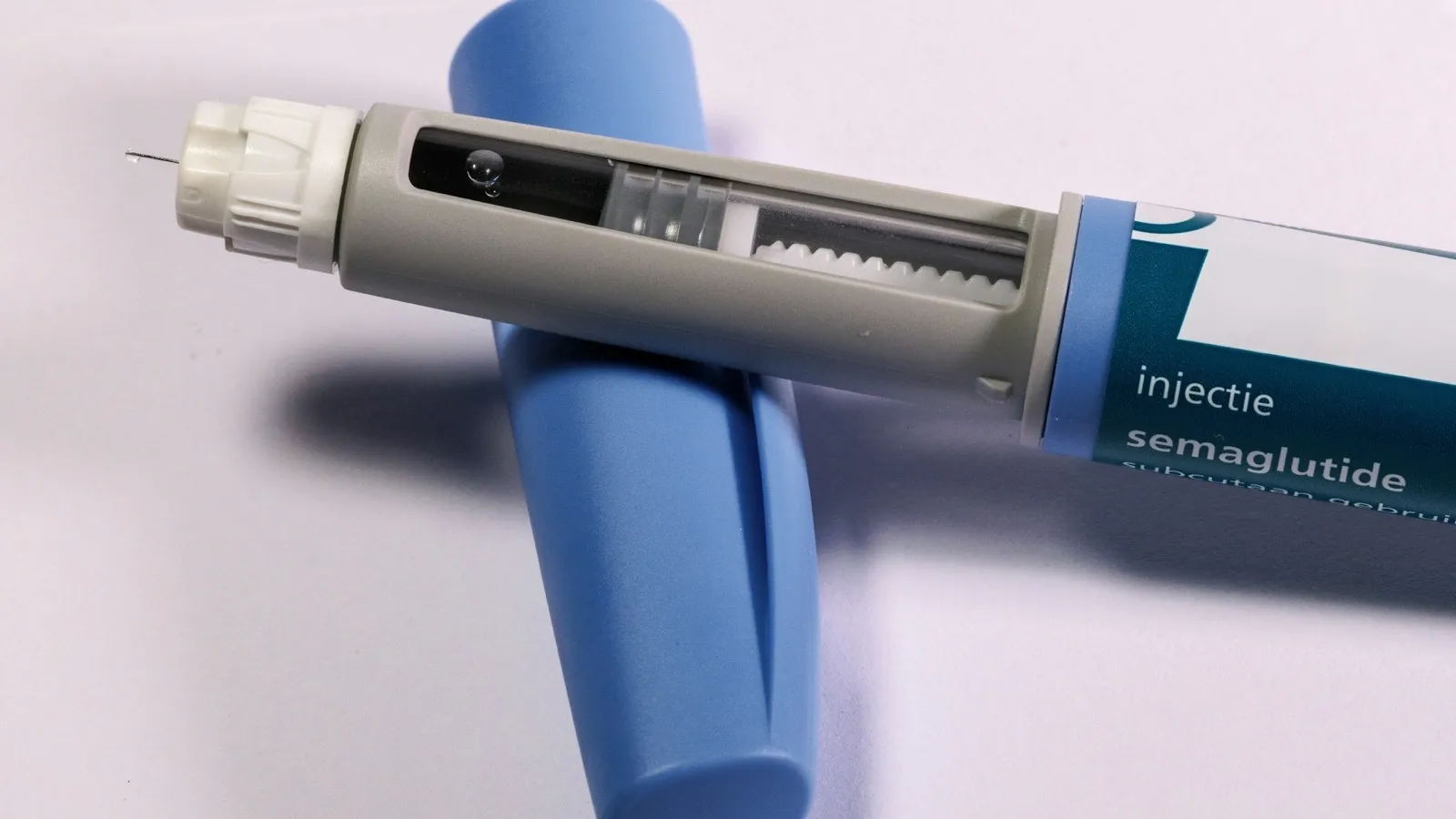
A GLP-1 injection pen on a bathroom counter

What Happens to Your Face After GLP-1 Weight Loss

If you’ve lost a meaningful amount of weight on a GLP-1 medication and the face in the mirror looks more tired than you feel, you’ve probably already met the nickname people use for it, “Ozempic face.” I’d rather call it what it is, which is anatomy, because the nickname makes it sound like the medication did something to your face, and it didn’t. Here’s what’s actually happening, why some people see it and others don’t, and how the plan for it gets made at Aetheria Aesthetics & Wellness™ in Pittsburgh’s North Hills. This is educational, not a plan. The plan belongs in a room with your history in it.

What “Ozempic face” actually is

Semaglutide and tirzepatide are tools for medically supervised weight management. They work on appetite and on how quickly the stomach empties. They have no action on facial fat, facial skin, or collagen. What they do, done well, is help a body lose a significant amount of weight, and often faster than diet alone would have managed.

When weight comes down in a meaningful way, the fat pads that give the face its shape thin along with everything else. The midface loses fullness. The temples can hollow. The lower face, which was propped up by volume, can look drawn, and the skin that used to be filled out doesn’t always tighten at the same pace as the volume beneath it left. The result reads as tired, sometimes as older, occasionally as a jaw that lost its line.

That’s the whole mechanism. It’s the same thing that happens after an illness, or after a determined year of diet and training. Any large, fairly quick loss can do it. The nickname attached itself to one medication because that medication made large, fairly quick loss common enough that people started comparing notes.

Why some faces show it and some don’t

Four things decide how much of this you’ll see, and only one of them is the medication.

How much you lost. Losing fifteen percent of your body weight moves facial fat far more than losing five.

How fast. Skin remodels on its own timetable, measured in months. Volume that leaves over a year gives the skin a chance to keep up. Volume that leaves over four months often doesn’t.

Where you started. Faces that were fuller to begin with have more fat to lose, and the change is more visible. Faces that were already lean tend to hollow at the temples and under the cheekbones rather than sag.

Your age and your skin. Collagen production slows through the forties and beyond, and sun exposure taxes it further. Younger skin with more elastin recovers more of the slack on its own. Older skin, or skin that has had a lot of sun, holds the new shape.

The medication’s only role in that list is speed. If you’ve heard that stopping it would bring your face back, it won’t, unless the weight comes back with it, and regaining weight to fill a face back out is a poor trade for the reasons you started. Don’t touch your medication over this. Bring the question to a consultation instead.

Some of it settles. Some of it doesn’t.

This is the part I’d want you to hear before anyone recommends anything.

Skin keeps remodeling for months after weight stabilizes. A face at month six of a steady weight often looks noticeably better than the same face did in the middle of active loss, because the tissue has caught up a little and the puffiness of rapid change is gone. If your weight is still moving, waiting is not doing nothing. It’s letting the picture settle so that whatever you do next is aimed at a target that’s stopped moving.

What doesn’t settle is deep hollowing. The fat that filled the temples and the cheeks is gone rather than resting, and skin can’t tighten around volume that isn’t there. A jawline that softened because a small pocket of fat sits under the chin doesn’t settle either. That pocket is stubborn by definition, or the diet would have taken it. Those two are what the consultation looks at, and they’re two different layers with two different tools.

The layer decides the tool

Once we know which layer is bothering you, the menu gets short.

Volume that’s gone: Sculptra®. Sculptra is a poly-L-lactic acid biostimulator. It doesn’t sit in the tissue the way a hyaluronic acid filler does. It prompts your own fibroblasts to build collagen over the months that follow, which is why it’s designed for gradual loss across an area, the cheeks, the temples, the lower face, rather than for a single line. A typical course is two to three sessions spaced several weeks apart, with the picture still building at month six. Nothing looks different the day you leave, which for this problem is rather the point. Individual results vary. The Sculptra page has the full timeline.

Skin that didn’t keep pace: Morpheus8®. Morpheus8 is minimally invasive radiofrequency microneedling on the InMode Luxora platform. Heat is placed at a chosen depth in the dermis to prompt collagen remodeling. It’s designed for skin tone, texture, and early laxity on the face, neck, or body. At the jawline it’s the skin-side tool: lax skin along the jaw and jowl with little fat underneath. A typical course is two to three sessions. Individual results vary. More on the Morpheus8 page.

A pocket under the jaw: QuantumRF. QuantumRF is minimally invasive internal radiofrequency, also on InMode Luxora: a small port, a thin cannula in the fat layer, controlled heat, under local anesthetic while you’re awake. It’s designed for a pocket of fat with loose skin above it, under the chin, along the jaw, or on the body, in someone close to the weight they mean to keep. It’s contouring, not a weight-loss tool. Individual results vary. More on the QuantumRF page.

One tool is common. Two happens when the anatomy actually has two problems, a hollow cheek above a pocket under the chin, say. Three at once is rare. If a device can’t do the job, because there’s more skin than energy-based treatment is designed to take up, you’ll hear that at your consultation and the plan will be built around it.

Start with a consult

Timing is the clinical decision

The question I’m asked most is not which tool but when.

If the scale is still moving in a meaningful way, the face conversation stays light and the weight care stays in front. Starting volume or contour work on a face that hasn’t settled means treating a target that’s still moving, and it muddies what you’re looking at later.

The conversation usually opens around month four to six of active loss, once your trend is visible. Sculptra and Morpheus8 have a wider window and can begin in the later phases of loss. QuantumRF waits until you’re close to the weight you mean to keep.

There’s no universal goal number, and I’d be suspicious of anyone who gives you one. The sequencing guide walks through the patterns we actually use.

It doesn’t matter where the prescription came from

A lot of the people who bring this question in started their GLP-1 through an online program. That’s fine. The medication did its job. What an online program can’t do is look at your face in a room, and that’s the part this needs.

Bring your current medication, your dose, and any labs you have. Your prescription can stay exactly where it is, or, if you’d rather have labs, body composition, and titration handled in the same room as the face conversation, the GLP-1 care can move in person to Aetheria. Either way, the face and body plan is built by one provider who has examined you, with the timing read from your weight trend rather than a template. That’s the whole idea behind the after-GLP-1 skin laxity page, and it’s where this plan begins.

What to bring to the consultation

  • Your current medication and dose, and roughly when you started.
  • Your weight trend, even if it’s just a few numbers from the last six months.
  • Any labs you have. Not required, but useful.
  • A photo of your face from a year or two ago. It tells me which layer left, and how fast.
  • The one thing that bothers you most. Not the list. The one thing.

Consultations run about 45 minutes, with no pressure to begin the same day. If the honest answer is “not yet,” you’ll leave with that and a date to look again.

Sources and further reading


The plan for what comes after weight loss is by consultation with Melissa Kolowitz, PA-C. Start with a consult if you want that conversation in person, or call (412) 385-3191.

This article is educational and does not constitute medical advice. Individual results vary. All treatments require an in-person consultation and clinical evaluation.

Frequently asked questions

What does "Ozempic face" mean?

It's the nickname people use for a face that looks hollow, drawn, or older after significant weight loss on a GLP-1 medication (semaglutide or tirzepatide). The medication doesn't act on the face. Weight loss reduces the fat pads in the cheeks, temples, and lower face, and skin that was filled out by that volume may not tighten at the same pace. Any method of losing a lot of weight can do the same thing. The nickname stuck because these medications made rapid loss common.

Does it go away on its own?

Some of it can. Skin remodels for months after weight settles, and the face often looks better at month six of a stable weight than it did during active loss. Deeper hollowing at the cheeks or temples usually doesn't refill on its own, because the fat that filled it is gone rather than resting. That's the part a consultation looks at. Individual results vary.

Will stopping the medication bring my face back?

Stopping the medication doesn't return facial fat unless weight returns with it, and regaining weight to fill a face back out is a poor trade for the health reasons you started. The better conversation is about what layer is bothering you, volume, skin, or a pocket of fat under the jaw, and what fits that layer. That's a clinical decision made in person, not a reason to adjust your medication on your own.

What treatments are used for it?

The layer decides the tool. Gradual hollowing at the cheeks, temples, or lower face is usually a Sculptra conversation, because it prompts your own collagen over months rather than adding volume on day one. Skin tone, texture, and early laxity are where Morpheus8 starts. A pocket of fat with loose skin above it, under the chin or along the jaw, is QuantumRF's job. One tool is common. Two happens when the anatomy has two problems. Individual results vary.

Do I have to be at my goal weight first?

There's no universal number, and the conversation usually opens around month four to six of active loss once the trend is visible. Sculptra and Morpheus8 can begin in the later phases of loss. QuantumRF is contouring rather than a weight-loss tool, so it waits until you're close to the weight you mean to keep. Individual results vary.

I got my prescription online. Can I still plan this in Pittsburgh?

Yes. Bring your current medication, your dose, and any labs you have. Your prescription can stay where it is, or the GLP-1 care can move in person to Aetheria if you'd like labs, body composition, and titration handled in the same room. Either way the face and body plan is built by a provider who has examined you, on a timeline read from your weight trend.

Explore the treatment → Ask about it at a consultation →

Start the conversation.

Introduce yourself, and Melissa will be in touch personally, usually within one business day.

What Patients Say.

Melissa did a wonderful job listening to my goals for my appointment and helping me determine what services were right for me. She could have easily convinced me to do more, but she was honest and only suggested what I truly needed done, which was greatly appreciated.
Liz M. · Verified Google review
Melissa is amazing! She will take time to listen, answer all your questions, and guide you to the right treatment.
Marsha S. · Verified Google review
Melissa is incredible. She listens to your needs/wants and won't suggest things that you don't need. She works with your budget, is attentive, and makes you feel safe and ensures you understand all of the layers of what you're getting into.
Kaitlyn P. · Verified Google review

Verbatim excerpts from public Google reviews of Aetheria Aesthetics & Wellness. Individual results vary.

Visit Aetheria in Pittsburgh's North Hills.

Consultations at Aetheria are unhurried and clinical. We serve patients across Pittsburgh's North Hills, including Ross Township, Wexford, Cranberry Township, Sewickley, and Mars. Book online or call to schedule a consultation with Melissa Kolowitz, PA-C.

Start Your Assessment

We answer personally, usually within one business day.

Aetheria Aesthetics & Wellness
Sola Salon, 1000 Ross Park Mall Dr Suite 4B
Pittsburgh, PA 15237

(412) 385-3191
[email protected]

Call or Text (412) 385-3191

Book Call