
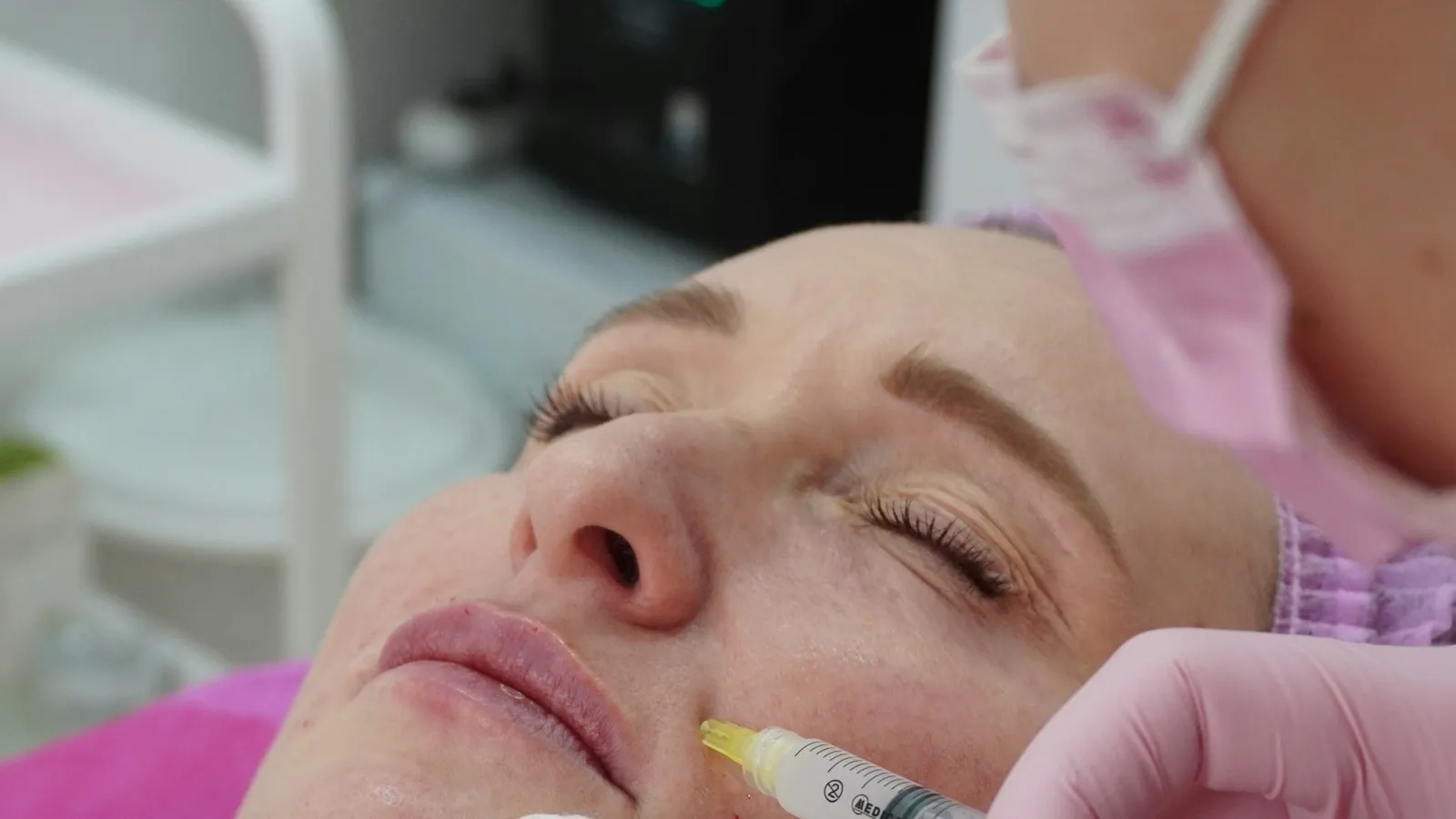
The RHA® Collection: Redensity, RHA® 2, and RHA® 4 Explained
The RHA® collection is one of the two dermal filler lines available at Aetheria Aesthetics & Wellness™ in Pittsburgh’s North Hills. It is not our everyday line, Restylane® is, but it is the one we reach for in specific situations. RHA stands for Resilient Hyaluronic Acid, and the name points to what makes it distinctive: these fillers are formulated to stretch and recoil with facial movement. Here is a clear guide to the three RHA® fillers and where each fits, from Melissa Kolowitz, PA-C.
What makes RHA® different
All RHA® fillers are hyaluronic acid, the same substance your body already produces, which is why they integrate naturally and can be dissolved if an adjustment is ever needed. What sets the collection apart is how the gel is made. RHA® is designed to be more adaptable in areas that move a lot, the parts of the face where a stiffer filler can look or feel unnatural when you talk, smile, or laugh.
That dynamic profile is the whole reason RHA® has a place in the practice. It is not better or worse than the Restylane® collection we use most often. It is a different tool, suited to certain areas and certain patients, and we choose it on purpose rather than by default.
The three RHA® fillers
RHA® Redensity is the most refined option in the collection, made for the delicate area around the mouth. It is the choice for fine lip lines, the vertical creases sometimes called lipstick lines, where a lightweight, movement-friendly gel can soften the line while keeping natural expression.
RHA® 2 handles moderate to severe lines and folds, including the nasolabial lines from the nose to the mouth. It adds balanced volume in expressive areas without overfilling, which makes it a flexible everyday option within the collection.
RHA® 4 is the most robust of the three, built for deeper folds and for cheek contouring, where more structural support is needed. It is FDA-approved for moderate to severe dynamic facial wrinkles and folds, such as nasolabial folds, and for cheek augmentation or correction of age-related midface contour deficiencies in adults aged 22 or older. Providers also commonly use it along the jawline, an off-label use of an FDA-approved product that Melissa talks through at consultation. Like the rest of the collection, it is formulated to keep natural movement even while providing that support.
How we choose
The question Melissa is really asking with RHA® is how much a given area moves. The more expressive the zone, the more a resilient gel earns its place. Lip lines on someone who talks and smiles a lot are the classic example. A stiffer filler there can read or feel unnatural the moment the face moves, while RHA®‘s stretch-and-recoil sits more comfortably through expression. That is the situation where we will choose it over a Restylane® product.
From there the match is straightforward. Fine lip lines and the perioral area point toward Redensity. Moderate to severe folds suit RHA® 2. Deeper folds, cheek volume, or jawline contouring point toward RHA® 4. As with every filler at Aetheria, we dose conservatively, adding measured volume and building at a follow-up rather than overfilling on the first visit. Individual results vary.