
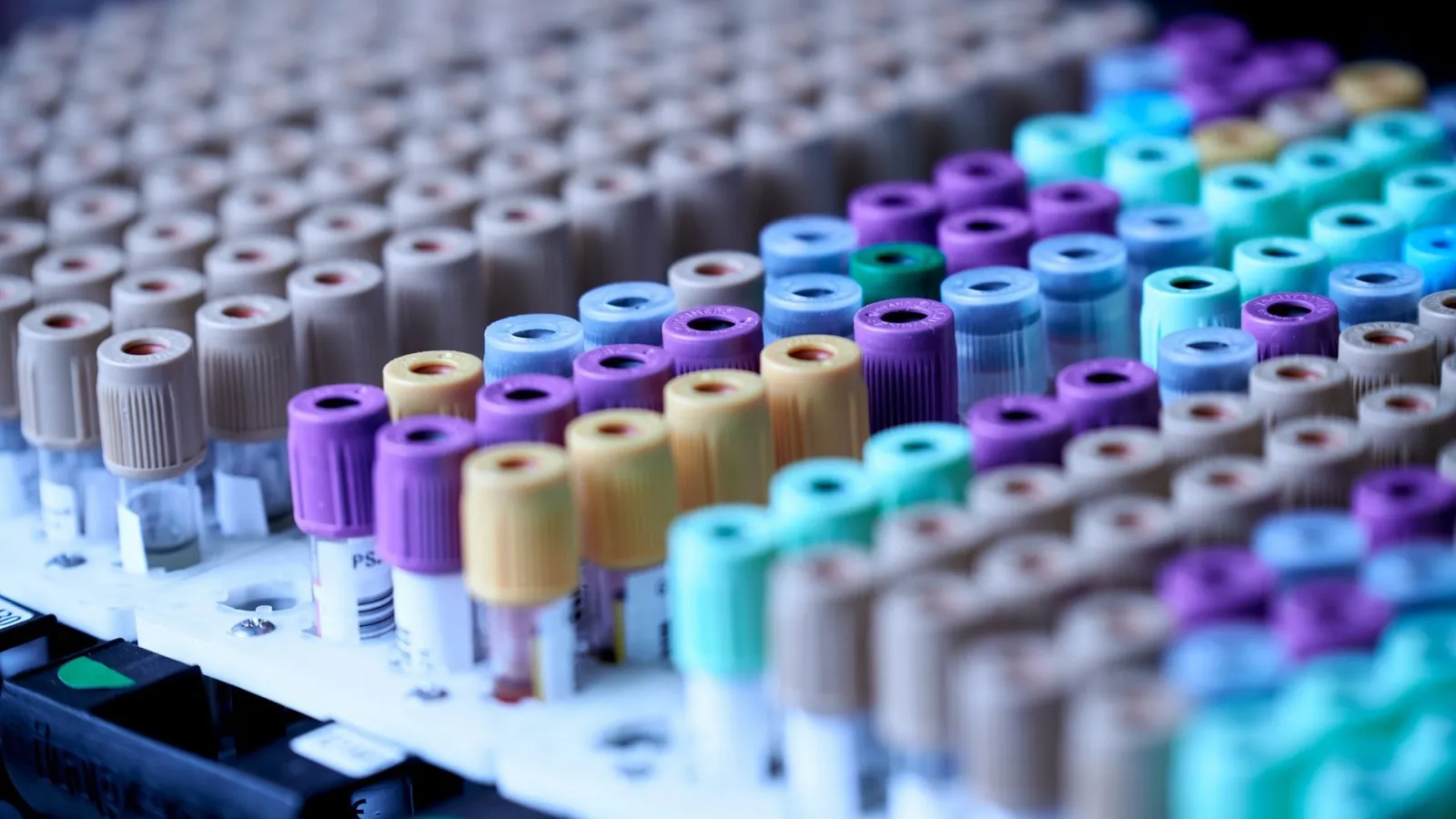
Labeled blood collection tubes racked in a diagnostic laboratory

The DUTCH Test: A Practical Guide to Hormone & Gut Health Testing

Hormone testing has become one of the most requested (and most misunderstood) corners of wellness care. Panels get marketed like products, results arrive as a PDF, and patients are left matching colored bars to supplement bottles. This guide explains what the DUTCH test actually measures, where the gut fits in, and how we use it at Aetheria Aesthetics & Wellness™ in Pittsburgh’s North Hills, from Melissa Kolowitz, PA-C.

What DUTCH stands for, and why dried urine

DUTCH is the Dried Urine Test for Comprehensive Hormones, developed by Precision Analytical (the official DUTCH platform). Instead of a single blood draw, you collect a few drops of urine on filter paper at specific times across a 24-hour period, let the samples dry, and mail them to the lab.

That collection method is the point. A blood draw captures one moment; dried urine collected across a day captures rhythm (how your hormones rise and fall), and it captures metabolites, the downstream products that show how your body actually processes what it makes. Two people can have identical hormone levels on a blood test and very different metabolite patterns.

What the panel measures

The DUTCH Complete panel covers four territories:

Sex hormones and their metabolites. Estrogen, progesterone, and testosterone, plus the pathways your body uses to break them down. The metabolite view is what distinguishes DUTCH from a standard panel: it shows not just how much hormone you make, but where it goes.

The adrenal picture. Cortisol, your primary stress hormone, mapped across the full day rather than at a single morning moment (Cleveland Clinic has a good primer on cortisol). A healthy curve is high in the morning and low at night; a flattened or inverted curve tells its own story. The DUTCH Plus panel adds the Cortisol Awakening Response, a closer look at how your stress system responds in the first 30 to 60 minutes after waking. For context on standard cortisol testing, see MedlinePlus.

Melatonin. Overnight output, read against the cortisol curve, useful context when sleep quality is part of the picture.

The gut marker: indican. This is the piece most people don’t expect in a hormone panel. Urinary indican is a byproduct created when intestinal bacteria break down the amino acid tryptophan. Elevated indican can point toward intestinal dysbiosis (an imbalance in gut bacteria) or incomplete protein digestion and gut permeability concerns.

The gut-hormone connection

Why does a gut marker belong in a hormone test at all? Because stress and digestion are not separate systems. High cortisol directly disrupts gut function and aggravates digestive disorders, and a struggling gut feeds back into how hormones are metabolized and cleared. Reading the adrenal markers and the indican level together is often more informative than either alone: it shows how your nervous system and your digestive tract are interacting.

That said, honesty matters here: indican is an indirect glance at the gut, not a microbiome analysis. If your primary question is bacterial balance, parasites, or gut inflammation, a comprehensive stool analysis is the right tool, and if that is your situation, we will say so at consultation rather than selling you the wrong test.

Let's Connect

How testing works at Aetheria

The DUTCH test is ordered through a qualified healthcare provider who can interpret the results and build a plan from them. At Aetheria the process looks like this:

  1. Consultation. Your symptoms, history, and medications, and an honest assessment of whether testing will tell us something useful.
  2. At-home collection. Filter-paper samples at set times across 24 hours. No blood draw, no extra office visit.
  3. Lab analysis. Results typically return within a few weeks.
  4. Results become a plan. You review the full report with Melissa in person. Findings feed directly into your plan, which may involve peptide therapy, nutritional and supplement support, the broader Metabolic Health Program, or a referral when something deserves further medical evaluation.

Testing also pairs naturally with medical weight loss: a hormone and stress baseline gives a GLP-1 program more context to work with, particularly when sleep, stress, or plateaus are part of the story.

Who should consider it

Adults whose symptoms have outrun routine labs: persistent fatigue, sleep disruption, mood shifts, stubborn weight, cycle irregularities, low libido, the “something is off” feeling that a normal CBC doesn’t explain. It is also a sensible baseline before starting peptide therapy or a metabolic program, so your plan is built from data rather than guesswork.

Testing is not a diagnosis by itself, and it never replaces medical evaluation when symptoms point to a condition that needs direct workup. The test is a tool; the consultation is the care.

Sources and further reading

Hormone and gut health testing at Aetheria is by consultation, ordered and reviewed in person by Melissa Kolowitz, PA-C. Learn more on our hormone & gut health testing page or book a clinical assessment.

This article is educational and does not constitute medical advice. Individual results vary. All testing decisions are made at an in-person consultation and clinical evaluation.

Frequently asked questions

How is the DUTCH test different from a blood test?

A blood draw captures one moment in time. DUTCH uses dried urine collected at several points across 24 hours, so it shows rhythm (how hormones rise and fall through the day) plus metabolites, the downstream products that show how your body processes what it makes. The two approaches answer different questions, and sometimes standard labs come first.

Is the DUTCH test hard to do at home?

No. You collect a few drops of urine on filter paper at set times over a 24-hour period, let the samples dry, and mail them to the lab in the provided packaging. Most patients find it easier than scheduling a blood draw.

Does the DUTCH test diagnose gut problems?

No. The indican marker offers an indirect signal of gut bacterial imbalance and protein digestion, read alongside the stress markers. A comprehensive stool analysis is the right tool for direct microbiome questions, and we will recommend one when that is what your situation calls for.

Explore the treatment → Ask about it at a consultation →

Let's Connect

Introduce yourself, and Melissa will be in touch personally, usually within one business day.

What Patients Say.

Visit Aetheria in Pittsburgh's North Hills.

Consultations at Aetheria are unhurried and clinical. We serve patients across Pittsburgh's North Hills, including Ross Township, Wexford, Cranberry Township, Sewickley, and Mars. Book online or call to schedule a consultation with Melissa Kolowitz, PA-C.

Start Your Assessment

We answer personally, usually within one business day.

Aetheria Aesthetics & Wellness
Sola Salon, 1000 Ross Park Mall Dr Suite 4B
Pittsburgh, PA 15237

(412) 385-3191
[email protected]

Call or Text (412) 385-3191

Book Call